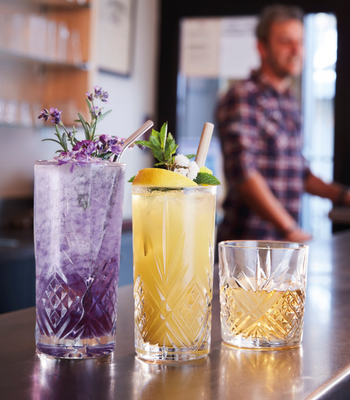


Fresh juice in foodservice is no longer limited to a glass of orange juice at breakfast. It can be served as a standalone drink, but also used as a base for lemonade, health shots, iced tea, spritzers, mocktails and premium signature beverages.
If fresh juices are to become a regular part of the menu, the appliance must be designed for a much more intensive workload than a household juicer. In professional foodservice, it is not only the flavour and quality of the juice that matter, but also output, continuous operation, motor cooling, speed of service, ease of cleaning and reduced downtime during busy periods.
So how do you choose a professional juicer for a restaurant, hotel, bar or juice bar? And which parameters really matter in everyday operation?
Commercial juicer vs household juicer – what is the difference?
At home, a juicer usually prepares a few glasses of juice and remains unused for most of the day. In professional foodservice, the operating pattern is very different.
During a hotel breakfast, weekend brunch or busy service in a juice bar, orders may come one after another. The appliance repeatedly processes firm fruit and vegetables, comes into contact with juice, pulp and moisture, while staff need to minimise interruptions.
Before buying a professional juicer, it is worth checking:
- the appliance output,
- motor type and suitability for continuous operation,
- cooling method and overheating protection,
- rotation speed,
- feed chute diameter,
- whether ingredients need to be pre-cut,
- pulp container capacity,
- disc and strainer design,
- protection of control elements against moisture and dirt,
- ease of disassembly and cleaning,
- solutions that help reduce dripping and keep the workstation clean.
Only the combination of these features shows whether an appliance is genuinely designed for intensive professional use.
What should you look for when choosing a professional juicer?
The first step should be to define the scale of production. Preparing a few servings per day requires a very different appliance from producing dozens or more than one hundred drinks during a single day.
The type of ingredients is also important. Soft fruit places different demands on the appliance than carrots, beetroot, pears, herbs or ingredients used in functional juices.
Output – how much juice needs to be prepared during service?
In foodservice, output is not just a technical figure. In practice, it answers a much more important question: how many orders can staff prepare within a given period?
The Barmatic SUPREME PRO professional juicer offers an output of approximately 120 kg of produce per hour and can prepare around 1 litre of juice in 45 seconds.
This is particularly important where fresh juice is a regularly ordered item: during hotel breakfast service, throughout the day in a juice bar, or in a restaurant where juice is also used as a base for other drinks.
Continuous operation and motor cooling
One of the most important differences between a household appliance and a professional unit is the way it is used. A commercial juicer may be switched on repeatedly within short intervals, so it is important to check whether the motor is designed for continuous operation.
SUPREME PRO uses a SUPREME 2.0 induction motor rated at 700 W, designed for continuous operation. The appliance runs at 3000 rpm.
This is why professional juicers should not be compared on wattage alone. What matters is the whole system: motor, disc construction, strainer, appliance geometry and heat dissipation.
SUPREME PRO features the StableCore solution. Its construction supports appliance stability and creates cooling air channels that help control temperature during intensive operation. The appliance also includes overheating protection.
Large feed chute – less ingredient preparation
In professional foodservice, the entire drink preparation process matters, not just the juicing time itself. If staff have to cut apples, pears or beetroot before every order, the overall preparation time quickly increases.
SUPREME PRO features an XXL feed chute measuring approximately 78–80 mm in diameter. This reduces the need to pre-cut many ingredients, provided they fit safely inside the chute.
The integrated wide tray can also act as a portioning area, allowing ingredients for upcoming orders to be prepared in advance.
Disc and strainer – important for more than just firm vegetables
A professional fresh juice menu is rarely limited to one type of fruit. In practice, the appliance may be used with apples, pears, carrots, beetroot, oranges, herbs, spinach and other ingredients used in fruit and vegetable blends.
SUPREME PRO uses a specialised Pangolin disc together with a Mesh strainer. This setup supports work with different types of produce, including vegetables and herbs.
Pulp container – fewer interruptions
Every time the pulp container has to be emptied, juice production stops. Its capacity is therefore especially important in high-volume locations.
SUPREME PRO is equipped with a 7-litre removable pulp container. Its large capacity helps reduce the number of interruptions during busy service.
Spout design and workstation cleanliness
In professional operations, small features that help keep the workstation clean can make a real difference. Juice dripping onto the counter after every serving quickly creates extra cleaning work.
SUPREME PRO includes a spout lock that helps reduce dripping after pouring. Its high spout also makes it easier to fill not only glasses, but larger jugs and blender jars.
Cleaning and protection of control elements
Fast juice preparation is only part of the daily workflow. The appliance also needs to be cleaned regularly.
Before buying, it is worth checking:
- which components can be easily removed,
- how easy it is to access the strainer and disc,
- whether food-contact parts can be washed in a commercial dishwasher,
- whether the design limits areas where pulp can accumulate,
- whether control elements are protected against moisture and dirt.
Food-contact parts of SUPREME PRO can be washed in a commercial dishwasher. The appliance also features a covered switch protected against moisture and dirt.
Barmatic SUPREME PRO in hotels, restaurants and juice bars
The demands placed on a juicer vary depending on the type of venue. That is why the appliance should always be assessed in the context of how it will actually be used.
Juicer for a hotel
During hotel breakfast service, many orders may arrive within a very short period. Later, the appliance may also be used in the restaurant, lobby bar or wellness area.
Output, continuous operation, cooling, a wide feed chute, large pulp container and easy cleaning are therefore particularly important.
Juicer for a restaurant
In a restaurant, it is worth looking at the juicer as more than just a machine for selling classic fresh juice.
Freshly extracted juice can be used in lemonades, iced tea, mocktails, spritzers, health shots and seasonal drinks. This allows one appliance to support several menu categories.
Juicer for a juice bar
In a juice bar, juice is not an add-on – it is often one of the core products. That makes preparation speed, continuous operation, reduced cutting, a large pulp container and the ability to process different fruit and vegetables especially important.
SUPREME PRO's output of approximately 120 kg/h and preparation speed of around 1 litre of juice in 45 seconds are suited to venues where fresh juice is produced regularly throughout the day.
How can fresh juice be used across the beverage menu?
A professional juicer does not have to be used only for classic fruit juices. Freshly extracted juice can become the base for an entire beverage category.
Fresh juices and health shots
Classic fruit and vegetable combinations can be complemented by small, concentrated servings based on vegetables, fruit, herbs and roots.
Lemonades and iced tea
Fresh juice can be used as a base or ingredient in signature lemonades and iced teas combined with herbs, citrus and ice.
Mocktails, spritzers and botanical drinks
Fresh juices combined with vegetables and herbs make it possible to create more complex alcohol-free and seasonal premium drinks.
One base, several menu items
The same freshly prepared juice can be sold as a standalone drink, used in lemonade, serve as a mocktail base, become part of iced tea or be added to a signature spritzer.
This means that the investment in a juicer should be assessed not only by purchase price, but also by the number of menu items the appliance can support.
Barmatic SUPREME PRO – key specifications
| Power | 700 W / 230 V |
|---|---|
| Motor | SUPREME 2.0 induction motor, designed for continuous operation |
| Speed | 3000 rpm |
| Output | approx. 120 kg/h |
| Preparation speed | approx. 1 l of juice / 45 seconds |
| Feed chute | 78–80 mm XXL |
| Pulp container | 7 l |
| Dimensions | 290 × 438 × (H) 512 mm |
| Weight | 12.3 kg |
| Disc | Pangolin |
| Strainer | Mesh |
| Stabilisation and air circulation | StableCore |
| Juice drainage system | Gravity Plus |
| Switch | covered and protected against moisture and dirt |
| Safety | locking system and overheating protection |
| Additional features | spout lock, high spout, portioning tray |
| Product code | 219898 |
What should you check before buying a professional juicer?
Before choosing an appliance, it is worth answering a few practical questions:
- How many servings of juice will be prepared each day?
- Is the motor designed for continuous operation?
- How does the appliance manage heat during extended use?
- Does it have overheating protection?
- Are the controls protected against juice, moisture and dirt?
- How quickly can the next serving be prepared?
- Can it process firm fruit and vegetables?
- How wide is the feed chute and how much pre-cutting is required?
- How large is the pulp container?
- How easy is it to remove and clean the strainer, disc and other components?
- Will the appliance be used only for juice, or also to prepare fresh bases for other drinks?
In professional foodservice, these practical questions often say more about an appliance than motor wattage alone.
FAQ – professional commercial juicers
What juicer is best for professional foodservice?
A professional foodservice juicer should be designed for intensive use. Key factors include output, continuous operation, cooling, a wide feed chute, large pulp container and easy cleaning.
What juicer is suitable for a hotel?
In a hotel, the ability to prepare many servings in a short time is especially important. Continuous operation, cooling, a wide feed chute, a large pulp container and easy cleaning should all be considered.
Can a professional juicer operate for many hours?
A juicer intended for intensive foodservice use should have a motor designed for continuous operation and solutions that support heat dissipation. SUPREME PRO uses the SUPREME 2.0 induction motor, StableCore air circulation and overheating protection.
What is the output of Barmatic SUPREME PRO?
The appliance offers an output of approximately 120 kg of produce per hour. Around 1 litre of juice can be prepared in approximately 45 seconds.
Do fruit and vegetables need to be cut before using SUPREME PRO?
The XXL feed chute measures approximately 78–80 mm, helping reduce the need to cut many ingredients, provided they fit safely into the chute.
Can SUPREME PRO be used for vegetables?
Yes. The appliance is designed for both fruit and vegetables. The Pangolin disc is optimised, among other applications, for vegetables and herbs.
How large is the pulp container?
SUPREME PRO features a 7-litre pulp container, which helps reduce the number of interruptions required for emptying.
What can be prepared besides classic fresh juice?
Fresh juice can be used as a base for lemonades, iced tea, health shots, spritzers, mocktails and signature botanical drinks.
A professional juicer should be ready for the entire service
When choosing a juicer for a restaurant, hotel, bar or juice bar, it is worth looking beyond motor power alone. More important is whether the appliance is designed for continuous operation, how it manages heat during intensive service, how often it requires interruptions and how much staff preparation it can reduce.
Barmatic SUPREME PRO combines an output of approximately 120 kg/h, an induction motor designed for continuous operation, StableCore, an XXL feed chute, a 7-litre pulp container, Pangolin disc, Mesh strainer and features that support workstation organisation and cleanliness.
Freshly prepared juice also does not have to be the final product. It can become the base of an entire beverage category – from classic juices and health shots to lemonades, iced tea, mocktails, spritzers and signature bar creations.
A professional juicer can therefore be more than a machine for extracting juice: it can support efficient service and the development of the entire beverage menu.