


Best Professional Porcelain – Fine Dine, Churchill or Porland?

Fine Dine, Churchill and Porland are porcelain brands frequently chosen by restaurants, hotels, catering companies and banquet venues. All of them offer tableware designed for professional use, but they differ in production technology, design, range of collections and price positioning.
Which professional porcelain is the best? The right choice depends primarily on the type of venue and how the tableware will be used:
- Fine Dine offers porcelain tailored to different service models – from fine dining and casual dining to hotels, catering and banqueting.
- Churchill specialises in Super Vitrified ceramics designed for intensive use in professional hospitality.
- Porland stands out for its broad choice of shapes, the creamy tone of Alumilite porcelain and collections intended for restaurants, hotels and banquet service.
Before making a decision, it is worth comparing not only the appearance of each collection, but also rim durability, stackability, the availability of complementary items and the expected operating cost of the tableware.
Fine Dine, Churchill and Porland – a quick comparison
| Brand | Technology and material | Characteristic appearance | Main application |
|---|---|---|---|
| Fine Dine | Different porcelain formulations tailored to specific applications, including high-magnesium porcelain, reactive-glazed collections and alumina-enhanced banquet porcelain | From minimalist, neutral collections to intense colours and decorative glazes | Fine dining, casual dining, hotels, catering and banqueting |
| Churchill | Super Vitrified ceramics, full vitrification and construction adapted to intensive use | Classic white, embossed surfaces, spinwash decoration and coloured glazes | High-volume restaurants and hotels, premium hospitality |
| Porland | Alumilite porcelain enhanced with alumina | A warm, creamy tone and a broad choice of white and decorated collections | Casual dining, hotels, catering and banqueting |
What should you consider when choosing professional porcelain?
Porcelain used in professional hospitality is exposed to much more demanding conditions than domestic tableware. Plates and dishes are used, stacked, transported and washed repeatedly throughout the day. They also come into contact with cutlery, professional detergents and temperature changes.
When choosing tableware for a restaurant, hotel or catering business, it is worth checking:
- rim resistance to chipping,
- glaze hardness and durability,
- low water absorption,
- resistance of decorations to frequent washing,
- safe and stable stackability,
- availability of different shapes and sizes,
- the possibility of adding replacement pieces in the future,
- warranty conditions offered by the manufacturer.
The durability of porcelain is not determined solely by the name of the material or the presence of a single ingredient. Firing technology, rim construction, product geometry, glaze quality and the way the tableware is used are also important.
Fine Dine – porcelain tailored to different types of service
Fine Dine porcelain should not be treated as one material offered in different colours. The brand’s portfolio includes several product groups designed to meet the different needs of restaurants, hotels and catering companies.
Fine Dine porcelain for fine dining and premium casual dining
The Nordic, Crust, Fizz and Fiord collections are intended for restaurants looking for a combination of elegant design, durability and consistent finishing.
They are made from a porcelain body with a high magnesium oxide content. High-temperature firing produces a hard, dense material with low water absorption.
Reactive glazes are not used in these collections. As a result, individual pieces have a more uniform appearance, making it easier to create a cohesive table setting and add replacement pieces later. Machine production also supports consistency of shape and rim profiles.
Nordic, Crust, Fizz and Fiord are particularly well suited to fine-dining and premium casual restaurants where the plate should enhance the presentation of the dish while retaining the properties required for everyday service.
Colourful Fine Dine porcelain with reactive glaze
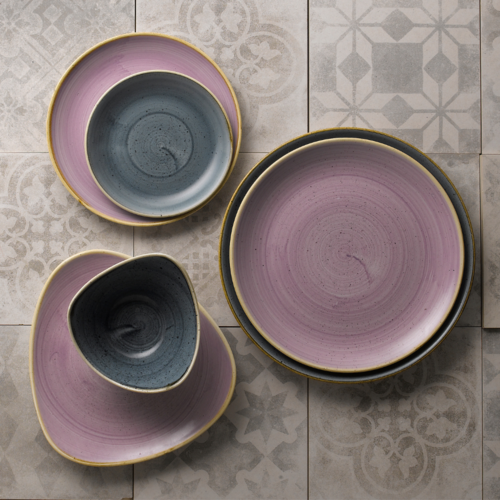
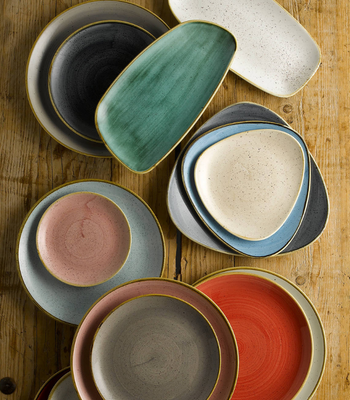
The second group includes collections such as Edenic, Rosa, Eminence, Constancy, Aurum and Stark. These colourful professional porcelain ranges are intended for restaurants that treat tableware as an important part of food presentation.
The porcelain is double-fired. The high final firing temperature produces a dense and hard material. The use of reactive glaze means that colour, tonal transitions and decorative patterns may vary slightly between individual pieces.
These differences are an intentional design feature rather than a product defect. They make each plate look slightly different. Reactive-glaze collections work particularly well with signature cuisine, natural ingredients and contemporary plating styles.
They are primarily intended for casual-dining restaurants, gastrobars and premium venues looking for decorative tableware designed for professional use.
Pure – Fine Dine banquet porcelain
Pure is a porcelain range designed for hotels, catering companies, breakfast restaurants and large events. In this segment, dimensional consistency, stackability, resistance to frequent washing and reduced losses caused by edge chipping are particularly important.
The Pure porcelain body is enhanced with alumina, which supports the hardness and strength of the material. The porcelain is high-fired in a single firing process. The technology has been tested, among other things, for low water absorption, resistance to glaze crazing and rim durability.
The range is available in two shades. Pure Crema has a warmer, creamier tone, while Pure Bianco is designed for hotels and restaurants looking for a brighter white.
Selected flat items in the Pure collection are covered by a lifetime edge-chip warranty. The exact scope of the warranty should always be checked for the individual product.
The combination of durability, a broad product range and a favourable quality-to-price ratio makes Pure a strong option for venues purchasing tableware in large quantities.
Churchill Super Vitrified – ceramics for intensive hospitality use
Churchill is a British brand with a history dating back to 1795, producing tableware in Stoke-on-Trent. Its offer is built around Super Vitrified ceramics, developed to combine high durability with the required level of whiteness.
Vitrification produces a densely fired material with very low water absorption. According to the manufacturer, all Churchill ceramic products undergo full vitrification and regular quality controls.
The durability of Churchill products is not based solely on the composition of the ceramic body. The brand also designs the shapes and profiles of its products specifically for professional hospitality use. Particular attention is paid to rims, high-impact areas and stable stackability.
The products are complemented by a durable glaze and decoration techniques adapted to professional use. As a result, the range includes both classic white tableware and recognisable decorated collections such as Stonecast and Studio Prints.
Churchill is a strong choice for restaurants and hotels with high tableware rotation, where durability, consistency and manufacturer reputation are key priorities. The brand is positioned in the higher segment of the professional hospitality market.
Porland – Alumilite porcelain for restaurants, hotels and banqueting
Porland uses Alumilite technology in many of its collections. It is based on hard-paste porcelain enhanced with alumina. The material combines durability with a distinctive warm, creamy tone.
According to the manufacturer, Alumilite porcelain is resistant to scratching and thermal shock. Another key advantage is the broad choice of shapes and sizes, allowing venues to create extensive tableware sets for everyday restaurant, hotel and banquet service.
Porland’s offer includes both decorated collections for casual-dining restaurants, such as Seasons, and more universal ranges intended for hotels, catering and high-volume service.
The creamy tone of the porcelain works well with reactive glazes, natural decoration and a more relaxed approach to food presentation.
Porland may be a suitable choice for casual-dining restaurants, hotels and banquet venues looking for durable tableware with a warmer tone, a broad variety of shapes and a wide range of applications.
Fine Dine, Churchill or Porland – which brand should you choose?
The decision should be based primarily on the character of the venue, the intensity of service and the way the tableware is stored and used.
Choose Fine Dine when:
- porcelain is needed for different areas of a restaurant, hotel or catering business,
- a favourable quality-to-price ratio is important,
- the venue is looking for both neutral and colourful tableware,
- porcelain is needed for fine dining or premium casual dining,
- durable banquet porcelain is required,
- the future availability of replacement pieces is important.
Choose Churchill when:
- the tableware will be used in an exceptionally intensive service environment,
- full vitrification is a priority,
- shapes specifically engineered for professional hospitality are important,
- UK production is preferred,
- the tableware brand forms part of the positioning of the restaurant or hotel,
- recognisable decorated collections are required.
Choose Porland when:
- the porcelain is intended for a casual-dining restaurant,
- hotel or banquet tableware is required,
- a warmer, creamy porcelain tone is preferred,
- a broad choice of shapes and complementary items is important,
- the restaurant is looking for decorative reactive-glaze collections,
- the tableware should combine durability with versatile design.
Which professional porcelain is the best?
There is no single best porcelain brand for every type of hospitality business.
Fine Dine stands out for the breadth of its applications and the clear division of its portfolio into fine-dining porcelain, colourful casual collections and banquet porcelain. Churchill is a strong choice for venues prioritising fully vitrified ceramics, British production and durability in intensive service. Porland, meanwhile, responds well to the needs of casual-dining restaurants, hotels and banquet venues, combining durability with a creamy tone and a broad selection of shapes.
When making a decision, it is worth comparing specific collections rather than brands alone. Plate shape, rim construction, stackability, the availability of complementary items, warranty conditions and the total operating cost of the tableware are also important.
Fine Dine Europe offers Fine Dine porcelain as well as selected Churchill and Porland collections. This makes it possible to compare different solutions and match the tableware to the actual needs of a restaurant, hotel or catering business.
Frequently asked questions about professional porcelain
Is Fine Dine porcelain suitable for fine-dining restaurants?
Yes. Nordic, Crust, Fizz and Fiord are intended, among other applications, for fine-dining and premium casual restaurants. They combine elegant shapes with a hard, dense material and a consistent finish without the characteristic variations associated with reactive glazes.
Which porcelain is best for banqueting?
Within the Fine Dine portfolio, the Pure range is intended primarily for banqueting, catering and hotel service. Porland also offers banquet collections. When choosing, it is worth comparing the available range of items, stackability, product weight and warranty conditions.
Is reactive glaze suitable for professional hospitality?
Yes, provided that it is applied to porcelain designed for professional use. However, natural differences in colour and decoration between individual pieces are an intentional design feature.
Is alumina-enhanced porcelain always the best?
No. Alumina may support the hardness and strength of the material, but porcelain durability also depends on firing technology, rim construction, product geometry, glaze quality and the way the tableware is used. Porcelain should not be compared on the basis of one ingredient alone.
What is the difference between Churchill Super Vitrified and Porland Alumilite?
Churchill focuses on the full vitrification of its proprietary ceramic body, shapes engineered for intensive hospitality use and a high level of consistency. Porland Alumilite uses alumina-enhanced hard-paste porcelain distinguished by its creamy tone and broad choice of shapes.
Can Fine Dine, Churchill and Porland be used in the same venue?
Yes. A hotel may use Pure or Porland banquet collections for conferences and events, colourful Fine Dine or Porland porcelain in a casual-dining restaurant, and Churchill in areas with particularly high tableware rotation. Matching the porcelain to the way it is used may be more efficient than using one collection throughout the entire venue.