
The Art of Sushi Service with Fine Dine: Harmony, Color and Functionality

In Japanese culture, dining begins with the eyes. Sushi is not just about taste- it's a composition in which the dish serves as a frame for a work of art. The Fine Dine portfolio meets the needs of modern sushiya and fusion restaurants, offering porcelain and stoneware with unique reactive glaze finishes that align with the wabi-sabi philosophy- beauty in imperfection and nature.
Below, we present why Fine Dine collections (including Beryl, Lazur, Eminence, Iris, Dahlia) are the best choice for professional sushi service.
1. Geometry of Flavor: Rectangular and Elongated Plates
The foundation for serving maki sets, nigiri, and sashimi.
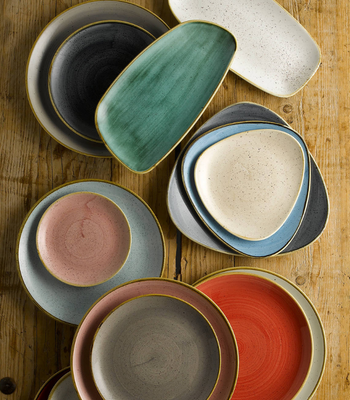
Perfect presentation: Long, narrow plates from the Iris, Dahlia, Arando, and Olive lines (dimensions from 21 to 30 cm) allow for linear arrangement of rolls, introducing order and rhythm to the table.
Variety of textures: Choosing between the smooth, shaded surface of the Lazur line (deep blue) and the speckled, earthy structure of Olive allows the chef to control contrast. Light rice and dark nori gain depth against the saturated colors of Fine Dine plates.
Functionality: Rectangular shapes save table space, which is crucial when serving multi-element omakase sets.
2. Organic Shapes: Presentation Plates and "Soft Edge"
Moving away from rigid frames toward modernity.
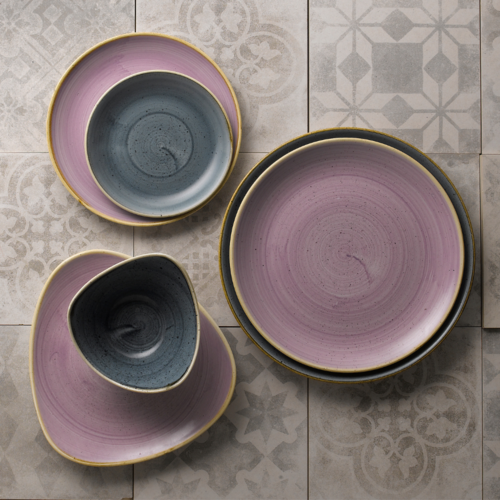
Stark, Aurum, Eminence, Constancy, Rosa, and Edenic collections: The quintessence of a modern approach to sushi. Plates with irregular, triangular forms (presentation plates) or soft rims are ideal for looser compositions, such as modern-style nigiri or fusion rolls with rich toppings.
Color play: The pastel pink of the Rosa collection or the subtle gray of Stark provide an excellent, non-invasive background for colorful fish (tuna, salmon), while the golden-brown tones of Aurum and Constancy emphasize the warm colors of grilled rolls and tempura.
3. Essential Accessories: Dipping Bowls for Sauces
Soy sauce, ponzu, or spicy mayo require proper presentation.
Dedicated vessels: Small bowls (approx. 8-9 cm) available in each color line allow for creating cohesive sets or the trendy mix & match effect.
Ergonomics: Proper bowl depth prevents sauce spillage, and their solid construction from stoneware and reinforced porcelain guarantees resistance to chipping in intensive restaurant use.
4. Depth and Volume: Chirashi and Poke Bowls
For dishes served on rice (donburi, chirashi), we recommend vessels with high rims.
Bowls and deep plates: Collections such as Eminence (ocean blue) or Edenic (vibrant green) in 20-25 cm sizes perfectly showcase the layered nature of bowl-type dishes while maintaining food temperature.
5. Natural Contrast: Wood and Melamine
To emphasize the rawness of ingredients.
Panama Trays and Madeira Boards: Wood and high-quality wood-imitating melamine pay homage to tradition. An oak tray or Madeira board provides a solid base for large sets (boat sets) and futomaki rolls, creating warm contrast to the cool-to-touch ceramics.
Why choose these collections for your sushi restaurant? Fine Dine tableware combines durability with the unique design of hand-finished ceramics. By moving away from boring white in favor of collections like Lazur, Edenic, or Dahlia, you build a unique visual identity for your establishment that is as important to guests (and their social media photos) as the taste of the dishes served.