
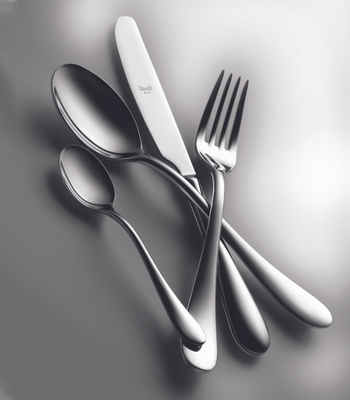


Ove cutlery is designed for professional foodservice: restaurants, hotels, banquet halls, catering companies, pizzerias, bistros and venues where tableware is used intensively every day.
In such conditions, the appearance of cutlery is not the only important factor. Durability, comfort of use, proper balance and resistance to frequent washing in commercial dishwashers also matter.
The final quality of cutlery is influenced by the entire production process – from selecting the right type of steel, through forming and edge finishing, to multi-stage polishing and quality control.
Why does the cutlery production method matter?
The production process affects:
- how the cutlery looks on the table,
- whether it feels comfortable in the hand,
- whether its edges are smooth and safe,
- how it performs during intensive use,
- how long it retains its attractive appearance.
Good foodservice cutlery should be properly balanced, comfortable for guests and visually matched to the porcelain, glassware and character of the interior.
That is why Ove collections differ both in the type of steel used and in their style and finish. The range includes classic, universal designs as well as collections with a more distinctive and elegant character.
1. Choosing stainless steel
The production of Ove cutlery begins with selecting the material. Depending on the collection, 18/10 or 18/0 stainless steel is used.
These markings refer to the chromium and nickel content of the alloy.
18/10 stainless steel
18/10 steel contains approximately 18% chromium and 10% nickel. Nickel contributes, among other things, to the material’s corrosion resistance and aesthetic qualities.
Cutlery made of 18/10 steel is a good choice for:
- upmarket restaurants,
- hotels,
- banquet halls,
- venues focused on elegant table settings,
- places where durability and a representative appearance are important.
18/10 steel is often chosen for collections with a more elegant character and a high-gloss finish.
18/0 stainless steel
18/0 steel contains approximately 18% chromium and has no added nickel. It is a practical solution for venues where a favourable price-to-quality ratio and the ability to purchase larger quantities of cutlery are important.
Collections made of 18/0 steel can work well in:
- pizzerias,
- bistros,
- catering companies,
- canteens,
- breakfast rooms,
- venues with a high turnover of tableware.
The absence of added nickel may also be important for establishments that consciously choose products made of 18/0 steel.
18/10 or 18/0 steel – which should you choose?
The choice should depend on the character of the venue, frequency of use, expected visual effect and available budget.
18/10 steel is most often selected where elegance and a high standard of table setting are particularly important. 18/0 steel, on the other hand, helps optimise equipment costs, especially when purchasing large quantities of cutlery.
2. Cutting and preparing blanks
Once the steel has been selected, steel sheets or strips are cut to the required sizes. These prepared elements will later become spoons, forks, knives, teaspoons and the other pieces in the collection.
At this stage, the following are already taken into account:
- the final length and width of the cutlery,
- its thickness,
- the shape of the handle,
- the proportions of the individual elements,
- the intended balance.
Precise preparation of the blanks affects dimensional consistency, resistance to deformation and comfort during later use.
3. Forming the shape
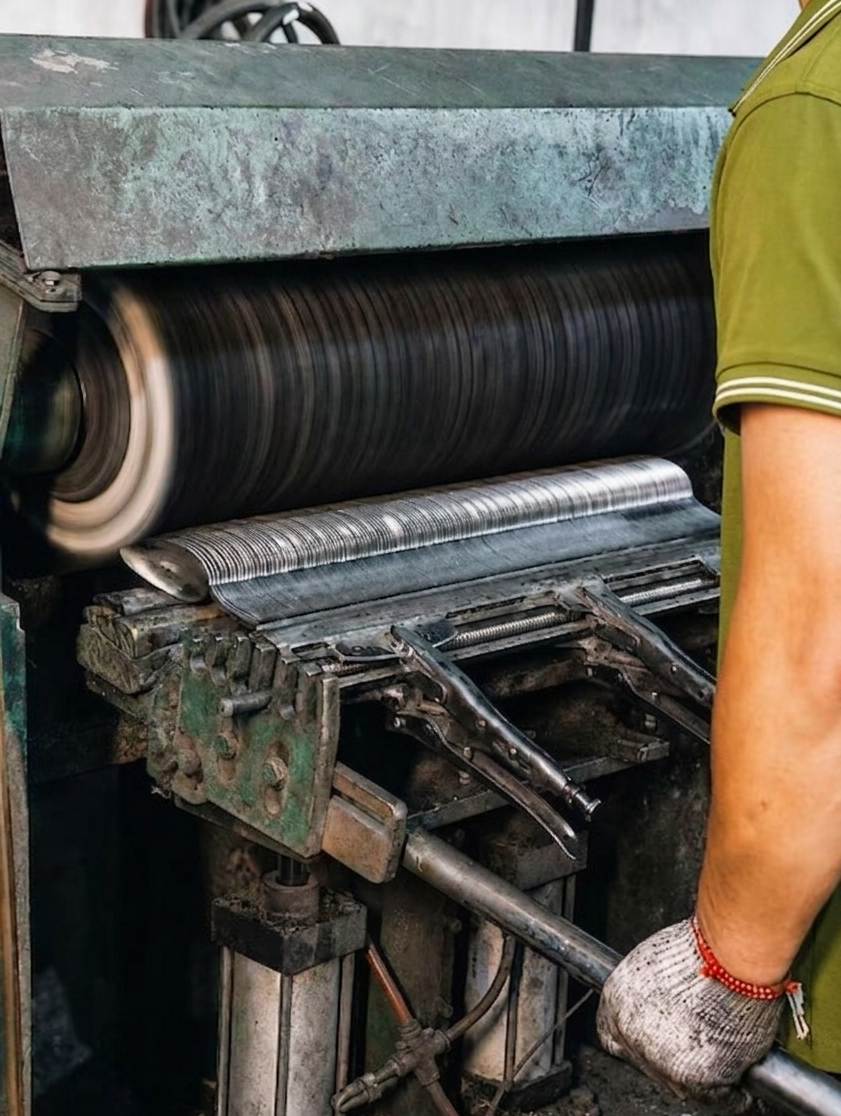
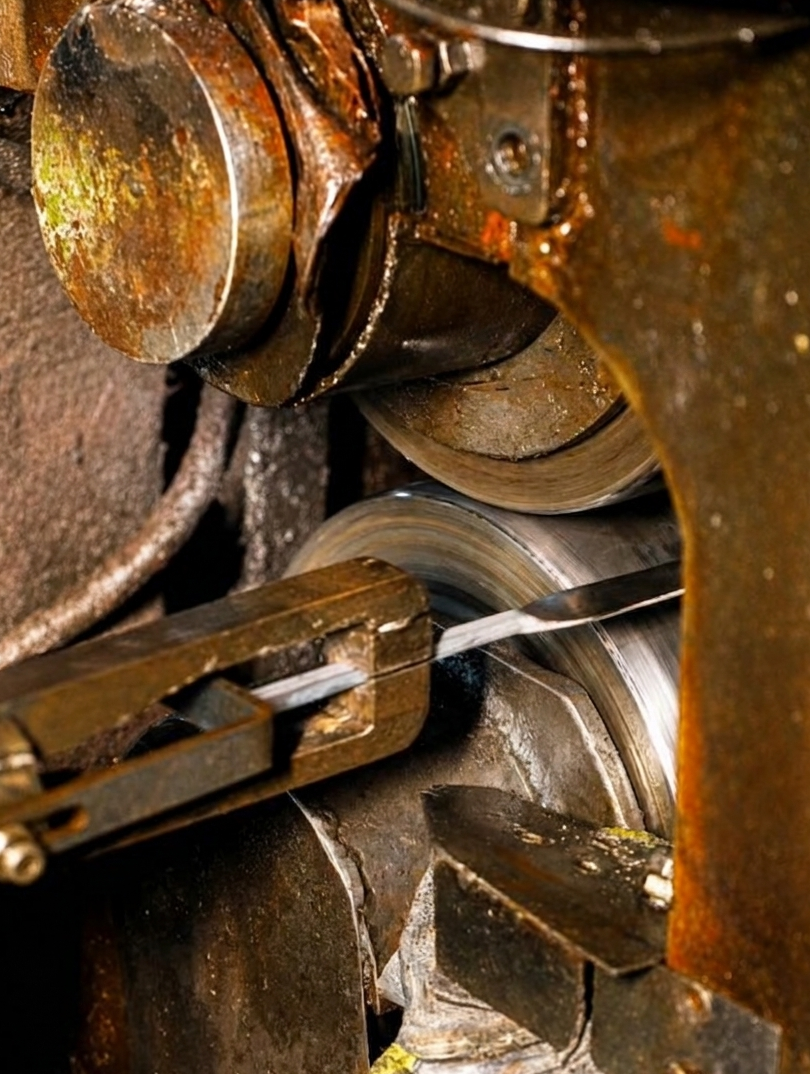
The steel is then stamped and formed using specialised machines. The flat piece of material gradually takes on the shape of the finished item of cutlery.
Each element requires a different type of processing:
- spoons are given a properly formed bowl,
- forks receive their tines and the correct profile,
- knives are formed into the shape of the blade and handle,
- teaspoons and additional pieces are shaped according to the collection design.
Proper forming affects both the appearance and functionality of the cutlery. Important factors include a comfortable grip, proportions, material thickness and matching the shape to the way dishes are served.
4. Finishing edges and details
After forming, each item undergoes precise finishing. Irregularities, sharp edges and residues left by the stamping process are removed.
The surfaces are smoothed and the details refined so that the cutlery is safe and pleasant to use.
This is one of the stages that directly affects how the product’s quality is perceived. Guests may not know the details of the production process, but they will easily notice whether:
- the fork feels comfortable in the hand,
- the knife has a comfortable handle,
- the edge of the spoon is smooth,
- the individual pieces are properly balanced.
5. Embossing patterns and giving the collection its character
Depending on the design, decorative embossing, lines, grooves or subtle ornaments may be added to the handles.
This stage gives the collection its individual character and makes it possible to match the cutlery to different table-setting styles – from classic and universal to more decorative or modern arrangements.
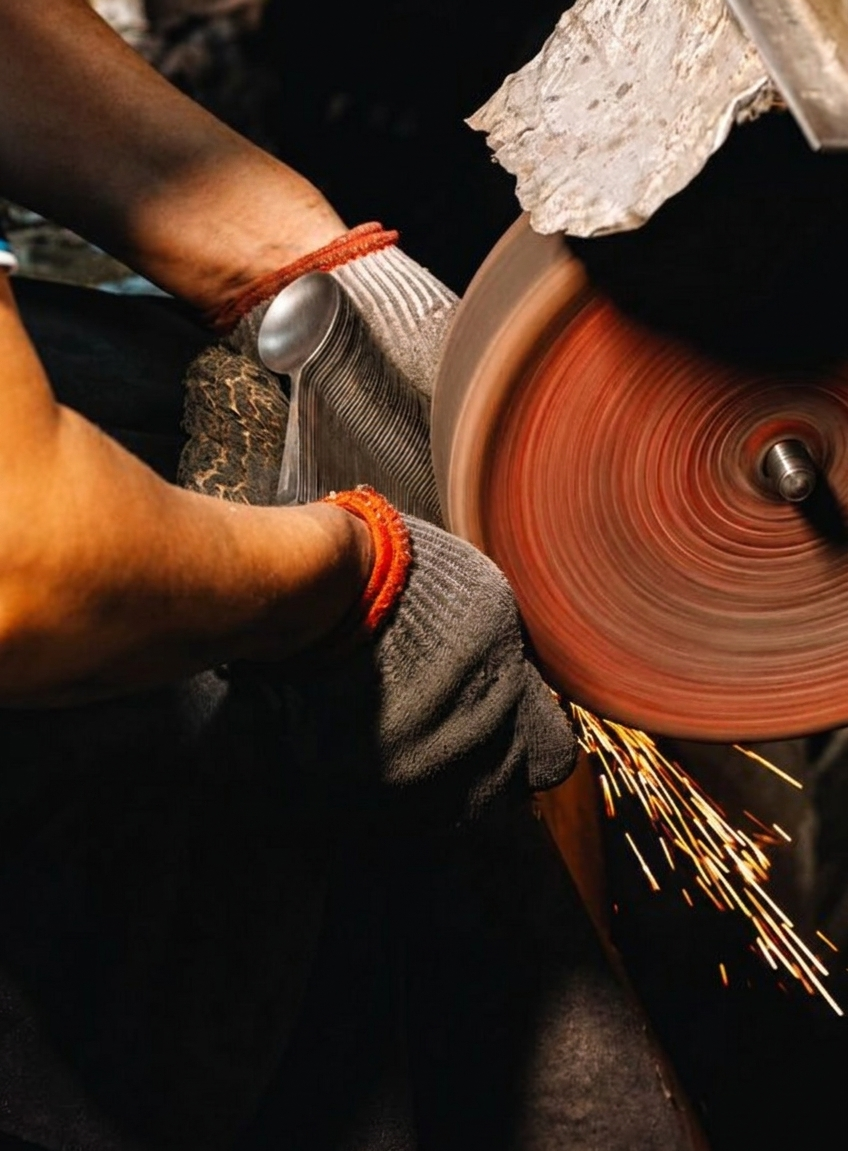
6. Three-stage polishing of the cutlery
Polishing is one of the most important stages in the production of Ove cutlery. It is responsible for the smoothness of the surface, the attractive appearance and the final shine.
The process includes three stages:
- first machine polishing,
- second machine polishing,
- final hand polishing.
First machine polishing
The first stage helps remove minor irregularities created during earlier processing and prepares the surface for further smoothing.
Second machine polishing
During the second stage, the surface is smoothed further. The cutlery gains a more uniform texture and a more pronounced shine.
Hand polishing
Final hand polishing makes it possible to refine details and areas that are more difficult to reach during machine processing.
Combining two machine-polishing stages with a hand finish makes it possible to achieve a mirror-polished effect, also referred to as mirror polishing.
The surface of the cutlery becomes smooth, glossy and attractively reflects light, allowing it to look elegant in a finished table setting.
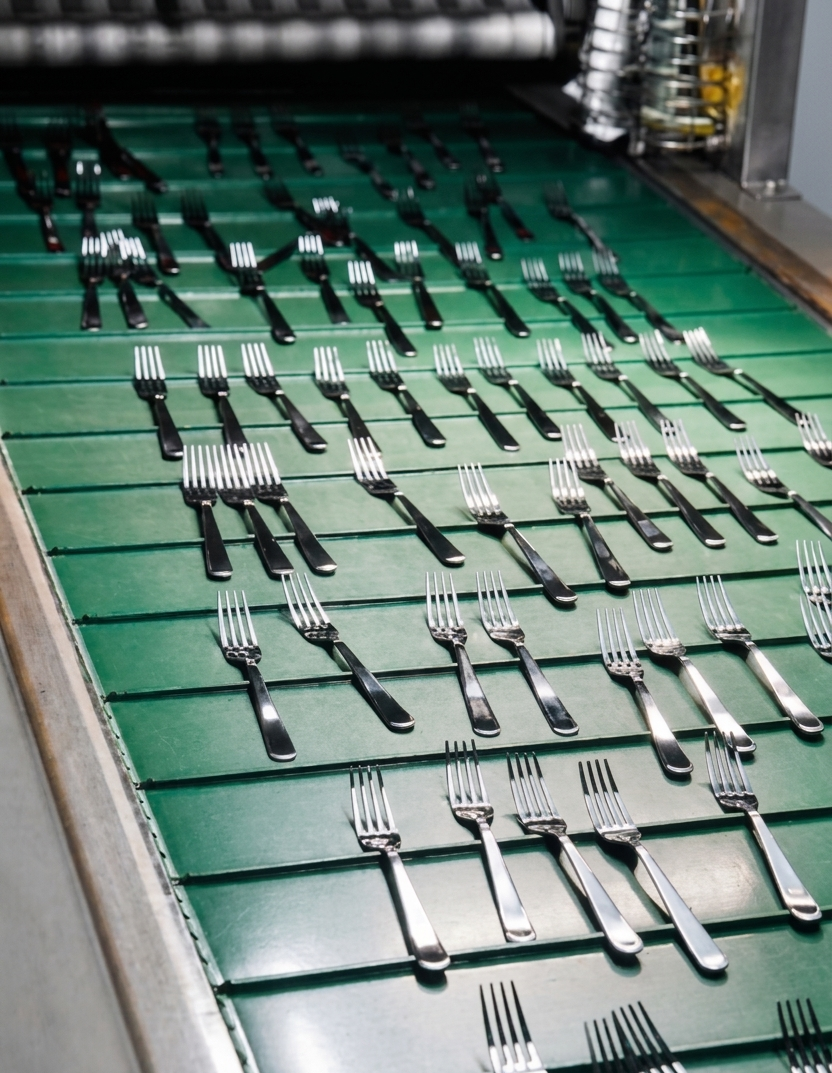
7. Cleaning after production
After polishing, the cutlery is thoroughly cleaned. The following are removed from its surface:
- residues of polishing compounds,
- dust created during processing,
- metal particles,
- process marks.
Cleaning prepares the cutlery for final quality control and packaging.
8. Quality control
Each item undergoes quality control. The following are checked, among other things:
- compliance of the shape with the design,
- quality of the polishing,
- smoothness of the surface and edges,
- precision of workmanship,
- balance,
- consistency of the individual pieces,
- overall appearance of the cutlery.
Quality control helps identify imperfections that could affect appearance or comfort of use.
9. Packaging and preparation for sale
Once quality control has been completed, the cutlery is assembled and packed.
Depending on the collection and intended use, it may be placed in:
- bulk packaging intended for professional foodservice,
- multi-piece sets,
- retail or presentation packaging.
The packaging method is selected according to the type of product and sales channel.
What does this process mean for restaurants?
The multi-stage production process affects features that are particularly important in professional foodservice:
- an attractive table setting,
- comfortable use for guests,
- smooth edges,
- consistency of the pieces within a collection,
- suitability for the intensive operation of the venue,
- the option to choose between 18/10 and 18/0 steel,
- an elegant surface finish.
Summary
The production of Ove cutlery is a multi-stage process in which technology is combined with precise finishing.
It includes:
- selecting 18/10 or 18/0 stainless steel,
- cutting the material,
- forming the individual elements,
- finishing edges and details,
- embossing patterns,
- two-stage machine polishing,
- final hand polishing,
- cleaning,
- quality control,
- packaging.
One of the most important elements of the process is three-stage polishing: twice by machine and once by hand. This makes it possible to achieve a mirror shine, a smooth surface and an attractive finish that highlights the character of the table setting.
Discover the Ove cutlery collections
Choose cutlery suited to the character of your restaurant, hotel, catering business or banquet hall. Compare collections made of 18/10 and 18/0 stainless steel and find a design that matches your table-setting style.