


Restaurant knives – kitchen, steak and pizza knives (4)
Catering knives are essential tools in any professional kitchen and restaurant service. Depending on their design, they can be used for preparing ingredients, peeling, portioning and slicing produce, as well as for serving steaks, pizzas and other dishes directly at the table. A suitably chosen knife streamlines a chef’s work and makes it easier to maintain consistency when preparing dishes.
This category includes both professional kitchen knives and models designed for more specialised tasks: knives for peeling, slicing, steaks and pizzas, or specific food products. When choosing, it is worth paying attention to the blade’s intended use, its length and shape, the handle material, and ergonomics suited to your working style.
Professional catering knives
Knives used in the catering industry should be selected primarily according to the task at hand. A knife used for many hours at a preparation station has different requirements to a small knife for precise peeling, and yet another set of requirements applies to a knife served to a guest for a steak or pizza.
In a professional kitchen, it is worth building a set comprising several specialised models rather than expecting a single all-purpose knife to be equally suitable for every type of ingredient.
Kitchen knives for the catering industry
Catering kitchen knives are used in the daily preparation of meat, fish, vegetables, fruit and other ingredients. The correct blade length, its profile and a comfortable handle are of key importance here.
Ergonomics is particularly important when carrying out a large number of repetitive tasks. A well-chosen knife should allow for a secure grip and free movement of the blade, suited to the specific working technique.
Peeling knives
Peeling knives usually have a shorter blade, which makes it easier to perform precise movements. They are ideal for peeling and cleaning vegetables and fruit, cutting out small pieces or carrying out minor preparatory tasks.
This is one of the essential tools in a preparation area, particularly where large quantities of fresh produce are regularly handled.
Slicing knives
Slicing knives are designed for making longer, even cuts and preparing consistent portions. They can be used for meat, cold cuts and other products where the method of serving requires aesthetically pleasing slices of as uniform a thickness as possible.
When choosing such a knife, it is worth paying attention to the length of the blade in relation to the size of the product being prepared.
Steak knives
Steak knives are designed for table service. Their purpose is to allow grilled or fried meat to be cut comfortably without the need to apply excessive force.
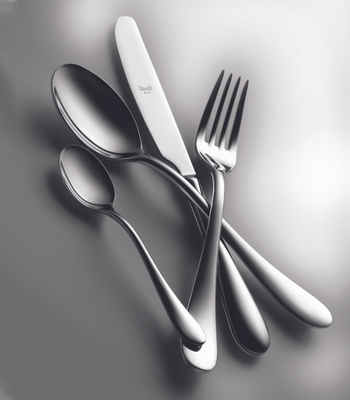
In a restaurant, a steak knife is also part of the table setting, so its design is just as important as its functional qualities. It is worth matching the model to the fork, crockery and the overall style of the restaurant.
Pizza knives
Knives designed for steaks can also be used as pizza knives. They allow guests to cut their slice comfortably directly on the plate and are particularly suitable for pizzas with a more well-baked or springy base.
Such cutlery is a practical choice for pizzerias, Italian restaurants and establishments that serve steaks, burgers and grilled dishes alongside pizza.
Specialist knives for specific products
Professional catering also uses models designed for very specific tasks. These may include knives for cheese and Parmesan, fruit, filleting or other products requiring a specific blade shape or type.
A specialised knife is particularly useful when a given task is performed frequently and forms a regular part of kitchen work.
How to choose the right blade length?
The length of the knife should be matched to the type of product and the cutting technique used. Short blades provide greater control for precise tasks, whilst longer ones are more comfortable for slicing and preparing larger items.
You should not be guided solely by size. The blade profile, its width, the balance of the knife as a whole, and the user’s individual technique are also important.
Stainless steel in catering knives
Professional knives often use stainless steel. However, the exact grade and properties of the steel may vary between manufacturers and ranges, so when choosing a specific model, it is worth checking its specifications.
The construction of the blade, the geometry of the cutting edge and the possibility of subsequent sharpening and maintenance are also important.
The handle and ergonomics of the knife
A professional knife should fit comfortably in the hand and allow for stable control of the blade. The material and shape of the handle affect working comfort, particularly when performing the same tasks repeatedly.
When choosing a knife for a commercial kitchen, it is worth considering not only the blade itself, but also the weight, balance and grip. Knives intended for table service may additionally feature decorative handles, e.g. with a wood-inspired design.
Sharpening professional knives
Even a high-quality knife requires regular maintenance of its cutting edge. The frequency of sharpening depends on the intensity of use, the type of steel, the cutting technique and the surface on which the cutting is carried out.
For day-to-day care, you can select suitable sharpeners and accessories according to the specific type of blade. Regular maintenance is more practical than allowing a knife to become completely blunt.
Knives for restaurants, hotels and catering
The choice of knives should be based on the type of catering establishment. A steakhouse requires suitable knives for diners, a pizzeria needs models that make it easier to slice pizza at the table, whilst a professional kitchen primarily requires a set of tools for preparing ingredients.
In hotels, catering establishments and larger kitchens, standardisation of equipment and the ability to easily restock the most frequently used models are particularly important.
How to choose catering knives?
Before purchasing, it is worth determining:
- whether the knife will be used in the kitchen or at the table,
- the type of food and the cuts to be made,
- the appropriate length and profile of the blade,
- the material and construction of the blade,
- the shape and ergonomics of the handle,
- sharpening and maintenance requirements,
- the number of knives required for each workstation,
- the design, if the knife is part of the table setting.
Catering knives should be selected according to their actual use – from precise peeling and preparation of ingredients, through slicing, to the professional serving of steaks and pizzas. A properly assembled set of knives helps to streamline kitchen operations and tailor the tools to the method of preparing and serving dishes.